Pic Credit: Pexel
Halloween 2026 will be observed on Saturday, October 31, bringing costumes, carved pumpkins, spooky decorations and themed parties to communities around the world.
While Halloween is not a traditional Indian festival and October 31 is not a public holiday in India, the occasion has gradually found a place in the country’s urban lifestyle. From costume parties at hotels and clubs to celebrations in schools, malls and gated communities, Halloween is becoming a familiar part of India’s growing global festival culture.
But the idea of remembering ancestors, spirits and the world beyond the living is not entirely unfamiliar to India. Long before Halloween-themed parties became popular in Indian cities, different communities across the country had their own rituals and traditions associated with ancestors, spirits and the transition between seasons.
When Is Halloween 2026?
Halloween 2026 will be celebrated on Saturday, October 31. It is one of the world’s best-known cultural celebrations, particularly popular in countries such as the United States, Canada, Ireland and the United Kingdom, and is also observed in many other parts of the world.
The name Halloween comes from “All Hallows’ Eve”, referring to the evening before All Saints’ Day. Its origins are closely linked to the ancient Celtic festival of Samhain, which marked the end of the harvest season and the beginning of winter. According to traditional beliefs, this was a time when the boundary between the world of the living and the supernatural was thought to become less distinct.
Bonfires, costumes and seasonal rituals were among the traditions associated with the occasion. Over the centuries, Halloween evolved by absorbing influences from different cultures and religious traditions. Today, it has become a lively celebration centred around costumes, trick-or-treating, parties, decorations, pumpkin carving and community events, while continuing to carry traces of its ancient roots.
How Halloween Is Becoming Popular in India
Halloween may have originated outside India, but its modern, entertainment-driven version is increasingly visible in major Indian cities.
In places such as Mumbai, Delhi, Bengaluru, Hyderabad, Pune and Kolkata, restaurants, hotels, clubs and entertainment venues often organise themed evenings featuring costumes, music, decorations and special menus.
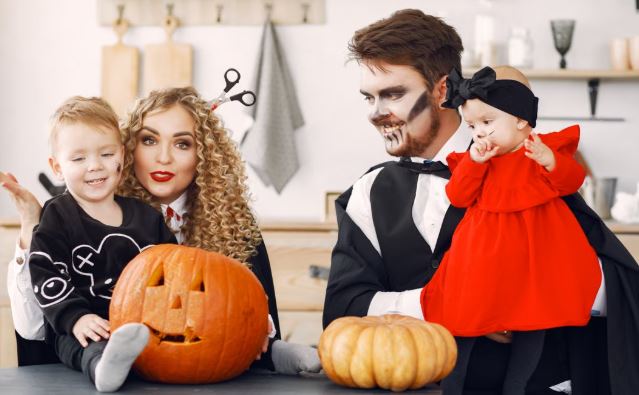
Schools and residential communities have also introduced child-friendly celebrations. Children may dress up as witches, superheroes, ghosts or fictional characters, while activities can include face painting, games, storytelling and supervised trick-or-treating.
For retailers and online businesses, Halloween has also created a small but growing seasonal market for costumes, masks, home decorations, themed accessories, chocolates and party supplies.
The celebration is therefore evolving in India less as a traditional religious festival and more as a social and cultural event centred around creativity, entertainment and community participation.
Halloween and India’s Own Traditions
Interestingly, the themes associated with Halloween are not completely unfamiliar to Indian culture.
India has numerous traditions connected with ancestors, spirits and the remembrance of departed family members. However, these practices are rooted in different religious, regional and cultural beliefs and should not simply be treated as Indian versions of Halloween.
One example is Bhoot Chaturdashi, observed in parts of Bengal around the time of Kali Puja. Families traditionally light 14 lamps, with the ritual associated with remembering ancestors and protecting the household from negative forces.
Another important tradition is Pitru Paksha, a period during which many Hindu families perform rituals and offer food and prayers in remembrance of deceased ancestors. The focus here is on respect, gratitude and familial remembrance rather than Halloween-style entertainment.
In parts of Kerala and Karnataka, traditional ritual performances such as Theyyam and Bhoota Kola involve elaborate costumes, face painting, music and performances connected with local beliefs about deities, spirits and ancestral forces.
These traditions show how deeply ideas surrounding ancestors and the spiritual world are woven into India’s cultural landscape.
Odisha’s Bada Badua Daka: Remembering Ancestors During Diwali
Odisha has its own distinctive tradition associated with ancestors during the Diwali period — Bada Badua Daka.
During the ritual, people traditionally remember and invoke their ancestors while lighting lamps or torches. The practice reflects a cultural belief in maintaining a connection between the living and those who came before them.
The tradition carries a message that is very different from the playful, costume-focused image of modern Halloween: remembering one’s roots, respecting ancestors and keeping family traditions alive.
This makes the Indian cultural landscape particularly interesting when viewed alongside Halloween. Both may involve ideas about the unseen world, but their meanings, rituals and social contexts are very different.
From Ancient Ritual to Modern Celebration
Halloween’s journey from an ancient seasonal festival to a global cultural event is a reminder of how traditions evolve.
Today, for many people, Halloween is less about its historical religious associations and more about having fun, dressing up, decorating homes and spending time with friends and family. Social media has further accelerated its popularity, allowing global trends to quickly become part of urban celebrations in India.
For Indian businesses, the occasion also represents an emerging niche opportunity. Bakeries, cafes, party planners, costume sellers, entertainment venues and retailers can use Halloween-themed products and experiences to attract younger consumers.
More Than Just a Night of Costumes
Halloween 2026 will undoubtedly bring plenty of costumes, parties, sweets and spooky decorations. But looking at the festival from an Indian perspective opens up a broader cultural conversation.
India already has centuries-old traditions of remembering ancestors and engaging with beliefs surrounding the spiritual world. Halloween may be a relatively new addition to the country’s urban cultural calendar, but the underlying human curiosity about life, death, memory and the unknown is much older.
As October 31 approaches, Halloween in India is likely to remain what it has increasingly become — a modern, global celebration enjoyed alongside a culture that already has its own rich and diverse traditions of remembering those who came before us.