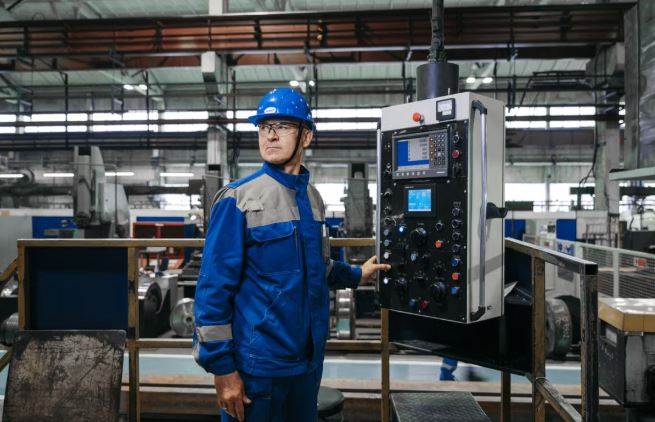
Pic Credit: Pexel
U.S. manufacturing automation is gaining momentum as businesses look for practical ways to manage labour shortages, control operating costs and improve production efficiency. From robotics on factory floors to artificial intelligence-powered quality checks, automation is becoming an important part of how manufacturers plan their operations and compete in a changing industrial landscape.
For manufacturers, the shift is not simply about replacing manual work with machines. It is increasingly about producing goods more consistently, reducing downtime and making domestic manufacturing economically viable. As companies reconsider their supply chains and bring more production closer to home, automation is emerging as a key investment priority.
Labour Shortages and Rising Costs Drive Investment
Finding and retaining skilled workers remains a challenge for many U.S. manufacturers. At the same time, wages, training expenses and other operating costs continue to influence business decisions. These pressures are encouraging companies to automate repetitive, physically demanding and precision-based tasks.
Robots and automated production systems can help businesses maintain consistent output, reduce errors and allow employees to focus on activities that require technical knowledge, problem-solving and supervision. However, automation does not eliminate the need for workers. Instead, it changes the skills manufacturers require, increasing demand for technicians, robotics specialists and employees capable of managing advanced production systems.
For small and mid-sized manufacturers, the challenge is to find a balance between the initial investment in technology and the long-term savings it can deliver.
Reshoring Creates New Opportunities for Smart Factories
Supply chain disruptions and growing interest in domestic production are also influencing investment decisions. Manufacturers seeking to reduce their dependence on overseas suppliers are exploring ways to expand production capacity within the United States.
Automation can make this transition more commercially attractive by improving output, shortening production cycles and reducing dependence on hard-to-fill roles. In industries where consistency, precision and production speed are essential, smart manufacturing systems can help domestic facilities compete more effectively.
Government support for semiconductor manufacturing, clean energy and infrastructure has also contributed to investment in industrial capacity. Nevertheless, incentives vary by programme, eligibility and project type, meaning businesses must assess the financial benefits against their specific investment requirements.
Automation Expands Beyond the Automotive Industry
Although automotive manufacturing has long been associated with industrial robotics, adoption is spreading across a wider range of industries. Semiconductor production, electronics, food processing, pharmaceuticals, medical technology and metal fabrication are increasingly exploring automated systems.
Each industry has different requirements. Food manufacturers may prioritise hygiene and consistent packaging, while electronics producers need precise handling and inspection. Smaller manufacturers, meanwhile, often work with changing product designs and shorter production runs.
This diversity is creating demand for flexible automation solutions that can be adapted without requiring a complete factory redesign. Collaborative robots, modular production equipment and machine vision systems are becoming relevant options for businesses that need to modernise gradually.
Artificial Intelligence Makes Automation More Adaptable
Artificial intelligence is expanding the capabilities of conventional factory automation. Combined with cameras, sensors and machine-learning software, AI can help identify product defects, recognise objects, monitor equipment performance and adjust certain processes in response to changing conditions.
Predictive maintenance is another important application. By analysing equipment data, manufacturers can identify signs of potential failure before a breakdown interrupts production. This can help reduce unplanned downtime, improve equipment utilisation and support more effective maintenance planning.
The growing connection between information technology and operational technology is making these capabilities possible. Factory equipment can increasingly share data with enterprise software, production dashboards and cloud-based monitoring systems.
However, greater connectivity also introduces cybersecurity risks. Manufacturers must protect production networks, control access to industrial systems and ensure that connected equipment does not create unnecessary vulnerabilities.
Small Technology Businesses Find New Market Opportunities
The expansion of automation is creating opportunities for small and medium-sized technology businesses. Manufacturers do not always need a complete automated production line; many require targeted improvements that solve specific operational problems.
Smaller technology providers can serve this demand through specialised software, robotic integration, machine vision, equipment monitoring and industrial cybersecurity services. Businesses that understand the practical needs of individual industries can help manufacturers introduce automation without undertaking large-scale capital projects.
Affordable and modular systems may be particularly attractive to companies that cannot justify expensive installations. Robotics-as-a-Service models, equipment leasing and subscription-based software can also reduce the initial financial burden by spreading costs over time.
For these providers, success will depend on demonstrating measurable business value. Manufacturers are more likely to invest when a solution can clearly improve production speed, reduce defects, lower maintenance expenses or address a persistent staffing challenge.
Workforce Skills Become Central to the Transition
As factories become more automated, workforce development is becoming just as important as equipment investment. Employees need training in machine operation, programming, equipment maintenance, data interpretation and industrial safety.
Manufacturers that invest in reskilling can make better use of new technology while retaining valuable operational experience. Partnerships with technical colleges, training centres and equipment suppliers can help businesses prepare employees for changing responsibilities.
The transition also requires realistic planning. Automation projects can involve integration costs, production adjustments and technical challenges, particularly when modern systems must work with older machinery. Businesses need to evaluate these factors before committing to major investments.
Conclusion
U.S. manufacturing automation is becoming a strategic business priority as companies respond to labour constraints, rising operating costs and the need for more resilient supply chains. Robotics, artificial intelligence and connected factory systems offer opportunities to improve productivity, strengthen quality control and support domestic production.
The shift also creates room for smaller technology providers that can deliver affordable, specialised and flexible solutions. For manufacturers, the greatest value will come from choosing technology that addresses genuine operational needs and complements the capabilities of their workforce.
As investment continues, the competitiveness of U.S. manufacturing will depend not only on how quickly businesses adopt automation, but also on how effectively they integrate technology, develop skills and turn efficiency gains into sustainable business performance.