Kolkata, Apr 07: In a significant step toward restoring Kolkata’s polluted urban waterways, Willowood Chemicals has removed 18.5 tonnes of floating waste from the Adi Ganga, ensuring that 30% of the collected material is utilised and processed for recycling through a technology-driven river-cleaning initiative. The project deploys AI-powered autonomous marine robots to clear floating debris from the Adi Ganga and other canals, demonstrating an innovative approach to sustainable urban water management. Implemented in collaboration with Bengaluru-based Clear Robotics India Pvt. Ltd. and undertaken with all necessary approvals from the Kolkata Municipal Corporation (KMC), the initiative marks a progressive move toward cleaner waterways and smarter environmental stewardship.
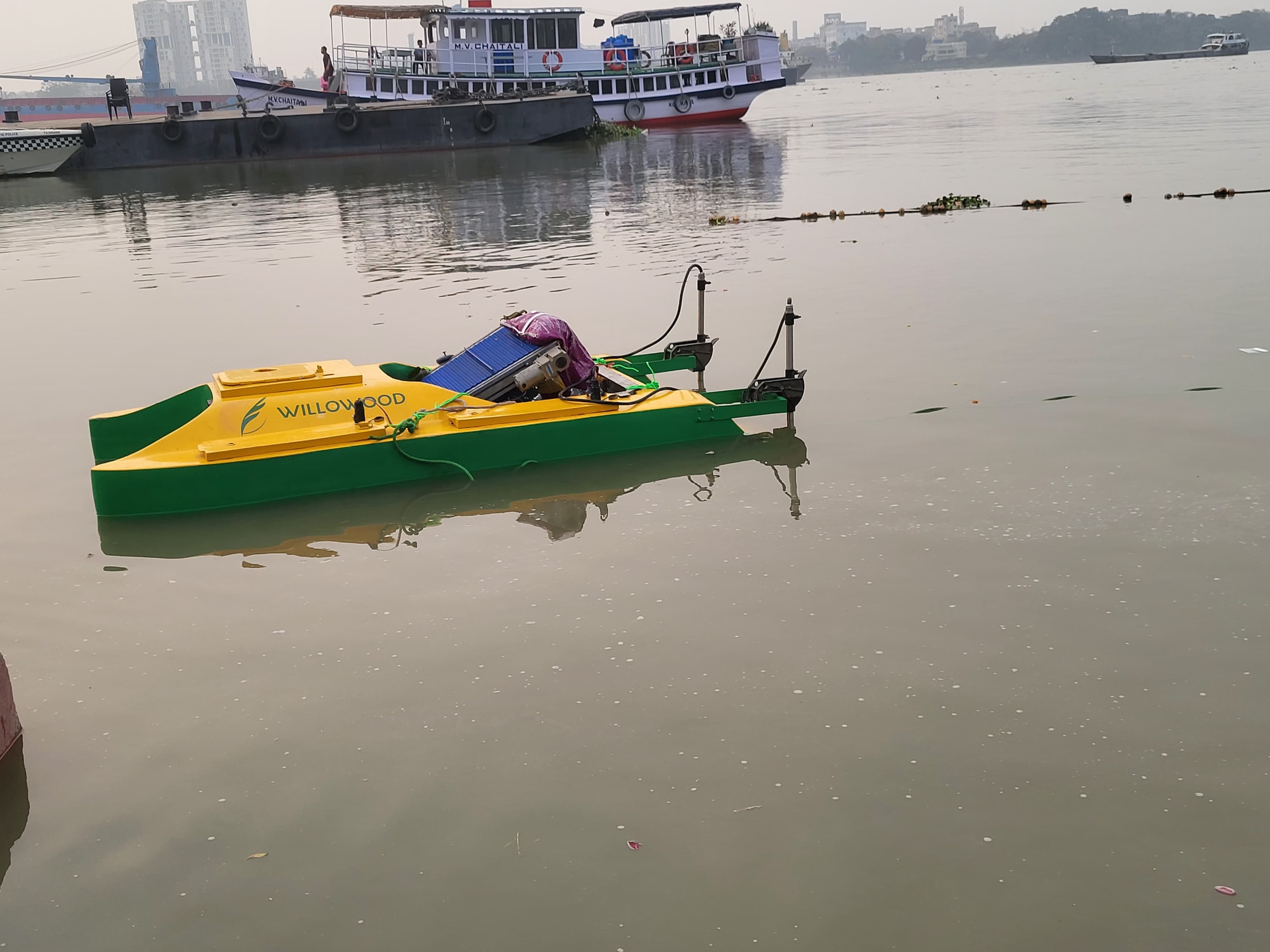
As part of this pilot project, Willowood is also committed to fostering an ecologically balanced environment for farmers by supporting the continued cleaning of the city’s major canal, the Adi Ganga, which is connected to the Hooghly River — a vital water source sustaining the agricultural ecosystems of South Bengal districts.
Additionally, Willowood’s commitment to recycling 30% of the recovered waste underscores its dedication to the circular economy — converting waste into valuable resources — while reinforcing its broader environmental responsibility as a leader in crop protection.
For the Kolkata operations, the Clearbot Class 2 model was used — a compact, fully electric, and autonomous vessel designed specifically for narrow and shallow waterways such as the Adi Ganga. Its design enables safe navigation in confined channels while ensuring consistent waste removal with minimal manpower. The system’s operational reliability allows for regular cleaning cycles, making it suitable for sustained river maintenance.
The Willowood River sponsored boat, deployed under the Adi Ganga Project, has delivered measurable environmental benefits. It has removed large volumes of anthropogenic waste, particularly single-use plastics and thermocol, intercepting debris before it can break down into harmful microplastics. The system has also cleared dense growth of invasive water hyacinth, improving sunlight penetration and oxygen exchange in the water — both essential for aquatic ecosystem recovery. Additionally, the removal of surface blockages has improved hydraulic flow, reducing stagnation and potentially curbing mosquito breeding.
The initiative aligns with Willowood Chemicals’ established CSR pillars — “Paryavaran” (Environment) and “We Care” — expanding its sustainability efforts beyond agroforestry into integrated water resource management. Urban rivers in industrial corridors often face dual pressures from non-biodegradable floating waste and invasive plant species such as water hyacinth. These factors obstruct natural flow, lower dissolved oxygen levels critical to aquatic life, and increase flood risks during the monsoon by restricting the river’s carrying capacity.
Beyond water restoration, Willowood Chemicals has invested in scientific research and academic collaboration in West Bengal. In association with Uttar Banga Krishi Viswavidyalaya (UBKV), the company has supported pesticide residue studies to assess residue levels across crops in North Bengal. It also collaborates with the Department of Agronomy at Visva Bharati University on research aimed at improving agricultural management practices.
Through its “Health & Protection, Hand in Hand” initiative, Willowood promotes plantation drives and awareness on the safe and responsible use of pesticides to safeguard farmers and encourage sustainable agriculture. The company’s Clinical Van Program further supports farmers by offering free soil testing and crop protection advice across India, including West Bengal.
Parikshit Mundhra, Managing Director, Willowood Chemicals, said water stewardship is central to sustainable agriculture.
“Our ‘Paryavaran’ initiative has always focused on strengthening the farmer ecosystem at its roots. By introducing mechanised river cleaning, we are safeguarding the most critical resource our communities depend on — water. This effort is not just about removing waste; it is about restoring the river’s life force, which directly sustains agricultural productivity, community health, and rural livelihoods. At Willowood, water stewardship is not an added responsibility — it is central to building truly sustainable agriculture and resilient farming communities,” he said.
He added that this project also integrates responsible waste management at every stage. All collected material is carefully segregated, with recyclable plastics channelled to authorised recycling partners — ensuring that waste is repurposed within a circular economy framework rather than ending up in landfills. “Nearly 30% of the recovered waste is being recycled and repurposed, reflecting our commitment to responsible resource management and strong Environmental, Social, and Governance (ESG) principles. We plan to continue deploying these vessels in the coming seasons and will share clean-up data with municipal authorities to support long-term urban planning and flood mitigation efforts,” he mentioned.
The project signals how industry, technology providers, and civic authorities can collaborate to address urban environmental challenges through scalable, data-driven solutions.

