India’s Green Hydrogen Opportunity: From Clean Energy to a New Export Economy
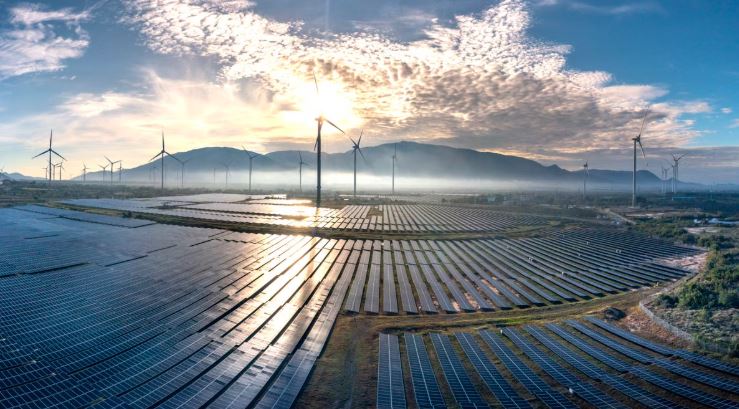
India’s renewable energy expansion is creating a new opportunity beyond electricity generation. The country is increasingly looking at green hydrogen and green ammonia as future industrial fuels, export products and building blocks for a cleaner manufacturing economy.
With abundant solar resources, a rapidly expanding renewable energy base and government-backed incentives, India is positioning itself to compete in the emerging global market for green hydrogen and its derivatives. S&P Global Energy has said India could become a competitive exporter of green hydrogen and ammonia, particularly as international buyers look for reliable supplies of low-carbon fuels.
Green hydrogen moves from policy to business
India’s National Green Hydrogen Mission has set a target of producing 5 million metric tonnes of green hydrogen annually by 2030. The mission was launched with an initial outlay of ₹19,744 crore and is designed to support production, domestic consumption, exports, infrastructure and technology development.
The scale of the planned ecosystem is significant. The government expects the mission to support more than ₹8 lakh crore in investment, create over 6 lakh jobs and add around 125 GW of renewable energy capacity by 2030.
These numbers show that green hydrogen is no longer only an environmental initiative. It is increasingly becoming an industrial and investment opportunity involving renewable power, electrolysers, engineering, storage, transportation, ports and manufacturing.
Manufacturing ecosystem begins to take shape
A major part of India’s strategy is to build domestic manufacturing capacity instead of depending heavily on imported technology.
So far, the government has awarded 3,000 MW per year of electrolyser manufacturing capacity to 15 companies, while incentives have been awarded for 8.62 lakh tonnes per year of green hydrogen production capacity to 18 companies.
This could create opportunities for equipment manufacturers, engineering companies, renewable power developers and a wide network of suppliers.
Electrolysers are particularly important because they use electricity to split water into hydrogen and oxygen. As renewable power becomes cheaper and more available, improving electrolyser efficiency and reducing production costs will be central to making Indian hydrogen competitive in global markets.
Green ammonia could become an important export product
For India, green ammonia may offer a practical route into the international clean-fuel market because ammonia is easier to store and transport than hydrogen itself.
The government has already moved towards creating domestic demand. Prices have been discovered for the production and supply of 7.24 lakh tonnes per year of green ammonia to 13 fertiliser units in India.
This creates an important link between clean energy and the fertiliser industry. Instead of relying entirely on conventional ammonia produced using fossil fuels, Indian fertiliser companies can gradually increase the use of low-carbon alternatives.
At the same time, international demand could provide another market for Indian producers. Long-term agreements with overseas buyers can give large projects greater visibility on future revenues and help developers move towards investment and construction.
Ports are becoming part of the hydrogen strategy
A successful export industry needs more than production plants. India will also require specialised storage, pipelines, terminals and shipping infrastructure.
This is where Indian ports are beginning to play a larger role. Paradip Port in Odisha, for example, has received approval for a dedicated green hydrogen and green ammonia jetty with an estimated investment of about ₹797 crore and a proposed handling capacity of 4 million tonnes per year.
Other ports are also being developed as green hydrogen hubs. Deendayal Port in Gujarat has allocated land for green hydrogen and ammonia projects and has infrastructure compatible with green ammonia handling, while V.O. Chidambaranar Port in Tamil Nadu is developing facilities linked to green fuels.
This could eventually create a new clean-energy logistics chain connecting renewable-energy-rich regions with industrial centres and overseas markets.
India’s competitive advantage will depend on cost
The biggest question for the industry is not simply whether India can produce green hydrogen, but whether it can produce it at a globally competitive price.
Renewable electricity is one of the biggest components of green hydrogen production costs. A recent government assessment noted that renewable energy can account for around 50–70% of the total cost of green hydrogen production.
That makes India’s solar and wind expansion particularly important. Lower-cost renewable electricity can improve the economics of electrolysis and strengthen the country’s position in international markets.
S&P Global Energy has also highlighted that the next phase for India’s renewable hydrogen sector will be about moving projects from early-stage development towards final investment decisions and actual construction.
A new opportunity for Indian businesses
The green hydrogen economy could extend well beyond large energy companies.
It can generate business opportunities for manufacturers of electrolysers and components, renewable energy developers, engineering and construction firms, storage companies, pipeline operators, port infrastructure providers and logistics businesses.
There is also scope for smaller industrial suppliers and startups to participate in areas such as sensors, control systems, hydrogen monitoring, specialised materials, safety equipment and digital management systems.
The government expects the National Green Hydrogen Mission to support indigenous manufacturing, employment and export opportunities alongside emissions reduction.
From energy transition to export opportunity
India’s green hydrogen story is therefore evolving from a climate-policy initiative into a broader industrial strategy.
The immediate focus will remain on reducing production costs, securing renewable power, building infrastructure and ensuring that announced projects reach commercial operation. But if these pieces come together, green hydrogen and ammonia could create a new export-oriented industry for India.
The opportunity is particularly significant because the sector connects several parts of the economy at once — renewable energy, manufacturing, fertilisers, refining, shipping, ports, engineering and international trade.
For India, the green hydrogen opportunity is ultimately about more than producing a new fuel. It is about building a new clean-energy value chain, creating industrial capacity at home and potentially establishing the country as a supplier to a global economy that is steadily moving towards lower-carbon fuels.