New Delhi, August 17: Prime Minister Narendra Modi has outlined a seven-pronged vision for India’s next phase of development, placing manufacturing, agriculture, technology, connectivity, defence, green growth and soft power at the centre of the country’s journey towards Viksit Bharat 2047.
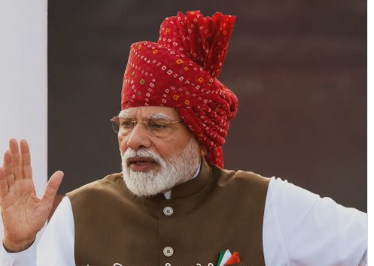
Unveiling ‘Shakti Ki Saptadhara’ from the Red Fort on Independence Day, Modi said the seven streams of national strength will help India build a stronger, more self-reliant and globally competitive economy.
The vision comes against the backdrop of what the Prime Minister described as India’s transformation from the ‘Fragile Five’ to the world’s fastest-growing major economy over the past 12 years.
Manufacturing is at the heart of the roadmap, with greater emphasis on domestic production, complete supply chains and globally competitive Indian products. A stronger manufacturing ecosystem could attract investment, create employment and help Indian companies expand into international markets.
Agriculture and food processing form another key pillar. Greater value addition, modern processing and stronger market linkages could open new opportunities for farmers while strengthening rural industries and agricultural exports.
The third stream focuses on technology and innovation, including artificial intelligence, semiconductors, quantum technology, space, robotics and advanced digital systems. These emerging sectors are expected to create new opportunities for young people, startups and skilled professionals while strengthening India’s position in the global technology economy.
Gati Shakti, the fourth pillar, focuses on improving connectivity through roads, railways, airports, waterways and modern logistics. Better infrastructure can reduce transportation costs, improve supply chains and make the movement of people and goods faster and more efficient.
The fifth pillar, Defence Shakti, focuses on strengthening India’s domestic defence capabilities and encouraging greater self-reliance in advanced defence technologies. This could also support domestic manufacturing and high-skilled employment.
The sixth stream brings together the green and blue economies, highlighting opportunities in renewable energy, green technologies, marine resources and sustainable development. These emerging areas could become important sources of investment, innovation and employment.
The seventh pillar is India’s soft power, with emphasis on yoga, Ayurveda, tourism, films, handicrafts, animation, gaming and other creative industries. India’s cultural influence can increasingly translate into economic opportunities and strengthen the country’s presence in global markets.
A major focus of the vision is India’s young population. The growth of technology, manufacturing, startups and new industries is expected to create demand for new skills and open pathways for entrepreneurship and employment.
Together, the seven pillars present a broad development strategy that connects economic growth with innovation, infrastructure, national capability, sustainability and global influence.
The next challenge will be to convert this vision into sustained investment, quality jobs and opportunities across different regions and communities.
‘Shakti Ki Saptadhara’ presents a forward-looking roadmap for India—one that seeks to combine economic strength, technological progress, stronger infrastructure and human potential to build a prosperous and future-ready nation by 2047.