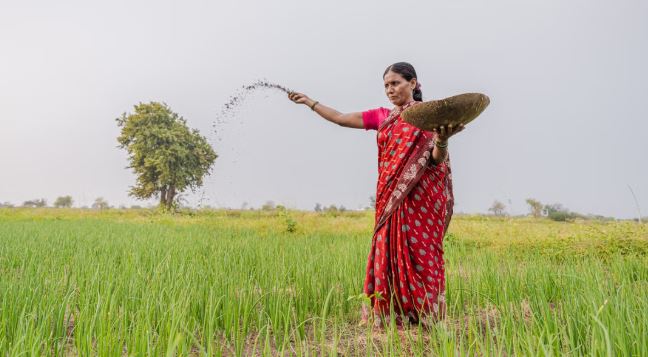
India’s food economy is undergoing a significant transformation, moving beyond traditional crop production towards value addition, food processing, organised retail and export-oriented agriculture. With changing consumer preferences, expanding digital markets and growing demand for diverse food products, the agricultural sector is creating new opportunities for small and marginal farmers to improve their incomes and strengthen their market presence.
Small and marginal farmers account for roughly 86% of India’s operational agricultural holdings, according to the Agriculture Census 2015–16. Despite their significant contribution to food production, many continue to face challenges such as fragmented landholdings, rising input costs, limited storage facilities and uncertain market prices. Connecting these farmers with modern supply chains and higher-value markets is therefore essential to making India’s changing food economy more inclusive.
The transition also presents opportunities for food processors, agricultural technology companies, logistics providers, retailers and rural entrepreneurs. By strengthening the link between farms and consumers, India can reduce avoidable post-harvest losses, improve farmer earnings and build a more resilient agricultural economy.
India’s Food Economy Is Moving Beyond Traditional Farming
Agriculture remains central to India’s economy, but the way food is produced, processed, distributed and consumed is changing. Demand for fruits, vegetables, dairy products, spices, millets, ready-to-cook foods and other value-added products is creating opportunities beyond conventional cereal cultivation.
Rising urbanisation, changing lifestyles and greater interest in convenience and nutrition are influencing food businesses to diversify their offerings. This shift is encouraging farmers and agricultural enterprises to explore new crops, improve product quality and connect with markets that offer better returns.
The growth of allied sectors is also broadening rural income opportunities. Dairy, livestock, poultry and fisheries can provide additional revenue streams, helping farming households reduce their dependence on a single crop or agricultural season.
However, diversification requires careful planning. Farmers need access to reliable buyers, suitable infrastructure, quality inputs and information about market demand. Without these support systems, moving into high-value agriculture can expose smallholders to new financial and production risks.
Value Addition Can Help Small Farmers Earn More
For small farmers, improving income does not always depend on increasing the volume of production. In many cases, better grading, sorting, packaging, processing and marketing can help increase the value of what they already grow.
Fruits can be converted into pulp, juices and dried products, while vegetables can be processed, packaged or supplied through organised distribution networks. Spices, millets and other locally grown products can also reach specialised markets when supported by consistent quality and effective branding.
These activities create opportunities for farmers to participate in more stages of the food value chain instead of selling their produce immediately after harvest. They can also support rural employment in processing, packaging, storage, transportation and marketing.
Small farmers, however, may not have the capital or technical expertise to establish processing facilities independently. Shared infrastructure, local processing units and partnerships with food companies can make value addition more accessible.
For rural entrepreneurs, investing in food processing and agricultural services can open new business opportunities while helping farmers retain a greater share of the value generated from their produce.
Farmer Producer Organisations Can Strengthen Bargaining Power
Fragmented landholdings often limit the ability of individual farmers to negotiate favourable prices, purchase inputs in bulk or meet the volume requirements of large buyers. Farmer Producer Organisations (FPOs) offer a practical way to address these limitations by bringing farmers together for collective economic activities.
Through an FPO, members can aggregate produce, share transportation costs, access agricultural inputs and negotiate with wholesalers, processors, retailers and institutional buyers. Collective operations can also make it easier to invest in storage facilities, grading equipment and primary processing infrastructure.
For smallholders, the main advantage is the ability to participate in markets that may otherwise be difficult to access independently. For businesses, FPOs can provide a more organised channel for sourcing agricultural products from multiple small farms.
However, successful FPOs require professional management, transparent financial practices, dependable buyers and working capital. Strengthening these capabilities is essential to ensure that collective organisations deliver sustained benefits to their members.
Horticulture and Allied Activities Create New Income Opportunities
Diversification into horticulture and allied agriculture can help farmers respond to changing market demand. Fruits, vegetables, spices, flowers and selected high-value crops may offer attractive returns under suitable local conditions.
The potential benefits depend on several factors, including climate, soil quality, water availability, input costs, crop duration and access to buyers. High-value crops can also involve greater price volatility and higher investment requirements, making market assessment particularly important before farmers change their cropping patterns.
Dairy, fisheries, poultry and livestock provide additional opportunities to diversify household income. These activities can generate earnings at different points throughout the year and create demand for feed suppliers, veterinary services, cold-chain operators and local retailers.
A balanced approach to diversification can help farming households manage uncertainty. Instead of replacing traditional crops entirely, farmers may consider combining suitable cash crops and allied activities according to their available resources and risk tolerance.
Digital Agriculture Is Connecting Farms With Wider Markets
Technology is gradually changing how farmers access information, finance and buyers. Digital agricultural platforms, online trading systems, mobile advisory services and traceability tools can help reduce information gaps and improve market access.
The electronic National Agriculture Market (e-NAM) connects participating agricultural markets through a digital trading platform. Such systems can improve price discovery and expand trading opportunities, although actual benefits depend on market participation, logistics, quality assessment and local implementation.
Digital tools can also help farmers access weather information, understand crop requirements and make more informed decisions about sowing, irrigation and harvesting. Better access to market prices may help them compare selling options rather than depending entirely on local intermediaries.
At the same time, technology alone cannot resolve every agricultural challenge. Reliable internet access, digital literacy, transparent transactions and physical infrastructure remain important. Digital platforms work best when they complement accessible local markets and dependable transport and storage facilities.
Cold Storage and Processing Infrastructure Can Reduce Post-Harvest Losses
A major challenge for small farmers is the limited time available to sell perishable produce after harvesting. Without appropriate storage, refrigeration, packaging and transportation, fruits, vegetables, dairy products and fish can deteriorate before reaching consumers.
Post-harvest losses reduce the quantity of produce available for sale and can weaken farm profitability. When many farmers harvest the same crop simultaneously, limited storage capacity may also increase pressure to sell quickly, sometimes at unfavourable prices.
Investment in village-level collection centres, warehouses, cold storage units, refrigerated transport and primary processing facilities can help address these gaps. Shared infrastructure is particularly important for smallholders who cannot afford individual facilities.
The Agriculture Infrastructure Fund supports financing for eligible post-harvest management and community farming assets. When implemented effectively, such infrastructure can improve supply-chain efficiency, strengthen market connections and create opportunities for local businesses.
Agricultural Exports Offer Growth Potential, but Quality Matters
India’s agricultural export sector provides opportunities for farmers producing products such as rice, spices, fruits, vegetables, marine products and processed foods. Export markets can create demand for consistent quality, traceability, suitable packaging and reliable year-round supplies.
Small farmers may benefit by supplying exporters and processors through FPOs, cooperatives or organised contract arrangements. These partnerships can help connect local production with international buyers while providing access to technical guidance and quality standards.
Nevertheless, exporting agricultural products is not straightforward. Farmers and producer organisations must navigate food safety requirements, residue limits, certification procedures, changing trade policies and logistical expenses. Small quantities and inconsistent quality can also make direct exports commercially difficult.
Partnerships with established exporters, aggregation centres and processing companies can help reduce these barriers. Building reliable domestic supply chains is an important first step towards expanding participation in international markets.
Access to Credit and Crop Insurance Remains Essential
Agricultural transformation requires investment, but small farmers often have limited access to affordable finance. Purchasing quality seeds, adopting improved irrigation systems, installing equipment or diversifying into new activities can require funds well before a harvest generates income.
The Kisan Credit Card scheme provides eligible farmers with access to institutional credit for specified agricultural and allied activities. Crop insurance under the Pradhan Mantri Fasal Bima Yojana can also help eligible farmers manage certain crop losses caused by covered risks, subject to the scheme’s conditions.
However, credit and insurance are most effective when supported by timely access, clear information and practical assistance with applications and claims. Farmers also need financial guidance to avoid taking on debt for investments that lack a dependable market.
Affordable financing, appropriate insurance coverage and better agricultural advisory services can help farmers invest with greater confidence while managing climate and market-related uncertainty.
Climate Change and Resource Constraints Require Sustainable Farming
India’s changing food economy must also address growing pressure on land, water and soil. Erratic rainfall, heat stress, groundwater depletion and soil degradation can affect crop yields and increase production costs, particularly for farmers with limited financial reserves.
Efficient irrigation, rainwater harvesting, soil testing, crop diversification and integrated pest management can help farmers use resources more effectively. Suitable climate-resilient crop varieties and locally relevant agricultural advice can further strengthen preparedness.
The transition towards sustainable farming must account for affordability and local conditions. Smallholders may need financial support, training and access to equipment before they can adopt improved practices at scale.
Businesses can contribute by investing in water-efficient technologies, responsible sourcing and supply-chain systems that reward consistent quality and sustainable production.
Building a Stronger and More Inclusive Food Economy
India’s agricultural transformation will depend on how effectively farmers connect with processing industries, organised retailers, digital platforms and export markets. Better infrastructure, stronger FPOs, affordable finance and reliable market information can help smallholders participate more actively in this transition.
Government programmes and private investment must also work together to address practical challenges, including storage shortages, fragmented supply chains, limited processing capacity and climate-related risks. Rural enterprises can play an important role by providing services that individual farmers cannot efficiently establish on their own.
For businesses, the changing food economy offers opportunities in food processing, cold-chain logistics, agricultural technology, packaging, quality testing and direct sourcing. For farmers, these developments can create additional routes to market and reduce dependence on selling unprocessed produce at the farm gate.
The long-term objective should be to ensure that agricultural growth translates into more stable incomes and stronger rural livelihoods. By combining productivity improvements with value addition, market access and sustainable resource management, India can build a food economy that benefits farmers, consumers and businesses alike.