New York, Sep 22: India’s economic diplomacy received fresh momentum as External Affairs Minister S. Jaishankar held a series of meetings with foreign ministers and leaders on the sidelines of the 81st United Nations General Assembly, with discussions spanning trade, investment, energy, pharmaceuticals, mobility and wider economic cooperation.
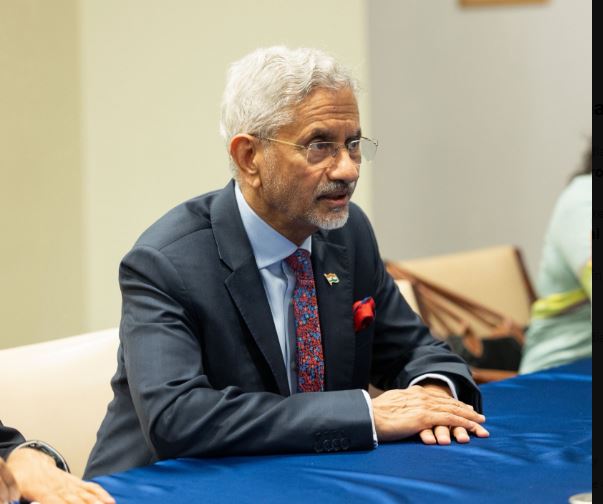
Pic Credit: https://x.com/DrSJaishankar
While the meetings covered a range of diplomatic and global issues, their economic dimension could be important for Indian businesses looking to expand their international footprint. Stronger government-to-government relationships often provide the groundwork for companies to explore new markets, build partnerships and attract investment.
Jaishankar’s meetings with representatives from France, Ecuador, Slovakia, Hungary and Switzerland, as well as his interaction with the President of Nauru, brought several areas of economic cooperation into focus.
Stronger partnerships can create new business opportunities
India’s engagement with European economies is increasingly linked to opportunities in trade, investment, technology and industrial cooperation.
During his meeting with French Foreign Minister Jean-Noel Barrot, Jaishankar reviewed the progress of the India-France Special Global Strategic Partnership. While regional and global developments were discussed, the broader relationship also provides a platform for cooperation in areas such as technology, defence, clean energy, infrastructure and advanced manufacturing.
For businesses, deeper economic relationships can make it easier to identify potential partners, develop joint ventures and build longer-term investment plans.
Switzerland and EFTA agreement could support investment
Economic cooperation was also discussed during Jaishankar’s meeting with Swiss Foreign Minister Ignazio Cassis, with both sides reviewing progress following the implementation of the India-EFTA Trade and Economic Partnership Agreement.
The agreement has wider implications for India’s business environment as it connects the country more closely with European markets and investment sources.
Greater trade and investment cooperation can help Indian companies access new customers and supply chains, while foreign companies can use India’s growing domestic market and manufacturing capabilities as a base for expansion.
The relationship is particularly relevant for sectors such as pharmaceuticals, financial services, technology, engineering and high-value manufacturing.
Pharmaceuticals and energy offer scope for expansion
Jaishankar’s discussions with Ecuadorian Foreign Minister Roberto Kury also focused on strengthening economic ties, including cooperation in energy and pharmaceuticals.
For Indian pharmaceutical companies, deeper engagement with Latin American markets can create opportunities to expand exports and establish new commercial relationships. India’s pharmaceutical industry has already developed a significant international presence, particularly in affordable medicines and healthcare products.
Energy cooperation, meanwhile, could open opportunities for companies involved in energy infrastructure, technology and related services.
The discussions also covered mobility, training and development partnerships, areas that can support greater movement of skills and expertise between the two countries.
European partnerships can strengthen India’s global supply chains
India’s engagement with Slovakia and Hungary also has an economic dimension. Both countries are part of the European industrial ecosystem, with established manufacturing and supply-chain networks.
Greater cooperation could create opportunities for Indian companies seeking to integrate into European supply chains, particularly in manufacturing, engineering, automobiles, technology and specialised services.
For India, such partnerships can contribute to efforts to diversify export destinations and strengthen connections with global production networks.
Skills and mobility becoming part of economic diplomacy
Another important element of India’s international economic engagement is the movement of professionals and skilled workers.
Discussions on mobility and training can help Indian professionals access overseas opportunities while allowing businesses in partner countries to tap into India’s large pool of skilled talent.
At the same time, international exposure can contribute to knowledge transfer and help Indian workers and companies develop capabilities that can be applied in domestic industries.
Wider global engagement can support economic growth
The first Visegrád Group (V4)-India Foreign Ministers’ Meeting, involving Poland, Hungary, Slovakia and the Czech Republic, further expanded India’s engagement with Central European economies.
Such platforms provide an opportunity to discuss not only geopolitical issues but also trade, investment, connectivity, technology and industrial cooperation.
For India, maintaining relationships across a wider group of countries can help reduce dependence on individual markets and create more diversified avenues for exports and investment.
What it means for Indian businesses
The economic impact of diplomacy is often gradual rather than immediate. Government-level discussions do not automatically translate into investment or trade deals, but they can create the conditions needed for businesses to pursue them.
For Indian companies, stronger bilateral relationships can mean new export markets, foreign partnerships, investment opportunities, technology cooperation and access to global supply chains.
For the Indian economy, greater international economic engagement can support capital inflows, business expansion, employment generation and technology transfer.
As India seeks to strengthen its position in global trade and investment, economic diplomacy is increasingly becoming an important part of the country’s growth strategy. Jaishankar’s engagements in New York underline this broader effort to connect India’s domestic growth ambitions with opportunities emerging across international markets.