Mumbai, Aug 31: Indian equity markets ended Monday in negative territory as selling pressure in IT, metal and realty stocks dragged the benchmark indices lower. A rise in crude oil prices, renewed geopolitical concerns and uncertainty over the global interest-rate outlook kept investors cautious.
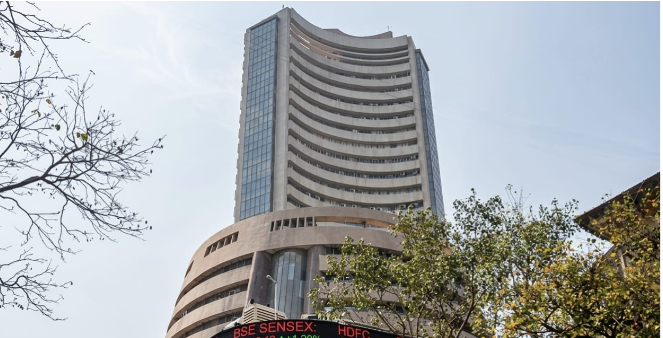
The BSE Sensex declined around 307 points to close at 76,957.27, while the Nifty 50 settled below the 24,100 level, reflecting a subdued mood across the domestic market.
Higher crude oil prices emerged as a key concern for investors. With oil prices moving above $90 a barrel, market participants remained watchful of the possible impact on inflation, corporate costs and India’s import bill. A sustained rise in energy prices could also put pressure on the rupee and influence future monetary-policy expectations.
Sector-specific selling added to the market weakness. Metal stocks faced notable pressure, while IT and realty shares also contributed to the decline in the benchmark indices. Investors adopted a cautious approach and remained selective amid heightened volatility.
Global monetary-policy expectations were another factor influencing sentiment. Hawkish signals from the US Federal Reserve have raised concerns about the possibility of higher interest rates, while elevated US bond yields and a stronger dollar could affect foreign investment flows into emerging markets such as India.
Investors were also monitoring the MSCI index reshuffle and changes linked to India’s new Closing Auction Session mechanism. Such developments can result in increased trading activity and short-term volatility in individual stocks as institutional investors rebalance their portfolios.
Despite Monday’s decline, market participants continue to watch domestic economic fundamentals for signs of resilience. Consumption, infrastructure activity, corporate investment and improving business conditions remain important supports for the broader Indian growth story.
Going ahead, investors are expected to track crude oil prices, global central-bank decisions, foreign institutional flows, domestic economic indicators and geopolitical developments for market direction.
The session highlighted the growing influence of global developments on Indian equities. While elevated oil prices and international uncertainty could keep markets volatile in the near term, easing geopolitical risks and stronger domestic economic conditions could provide support to equities.
For the wider economy, stable financial markets remain important for investor confidence, capital formation and corporate fundraising. The near-term market outlook is therefore likely to remain closely tied to energy prices, interest-rate expectations, global risk appetite and foreign investment flows.