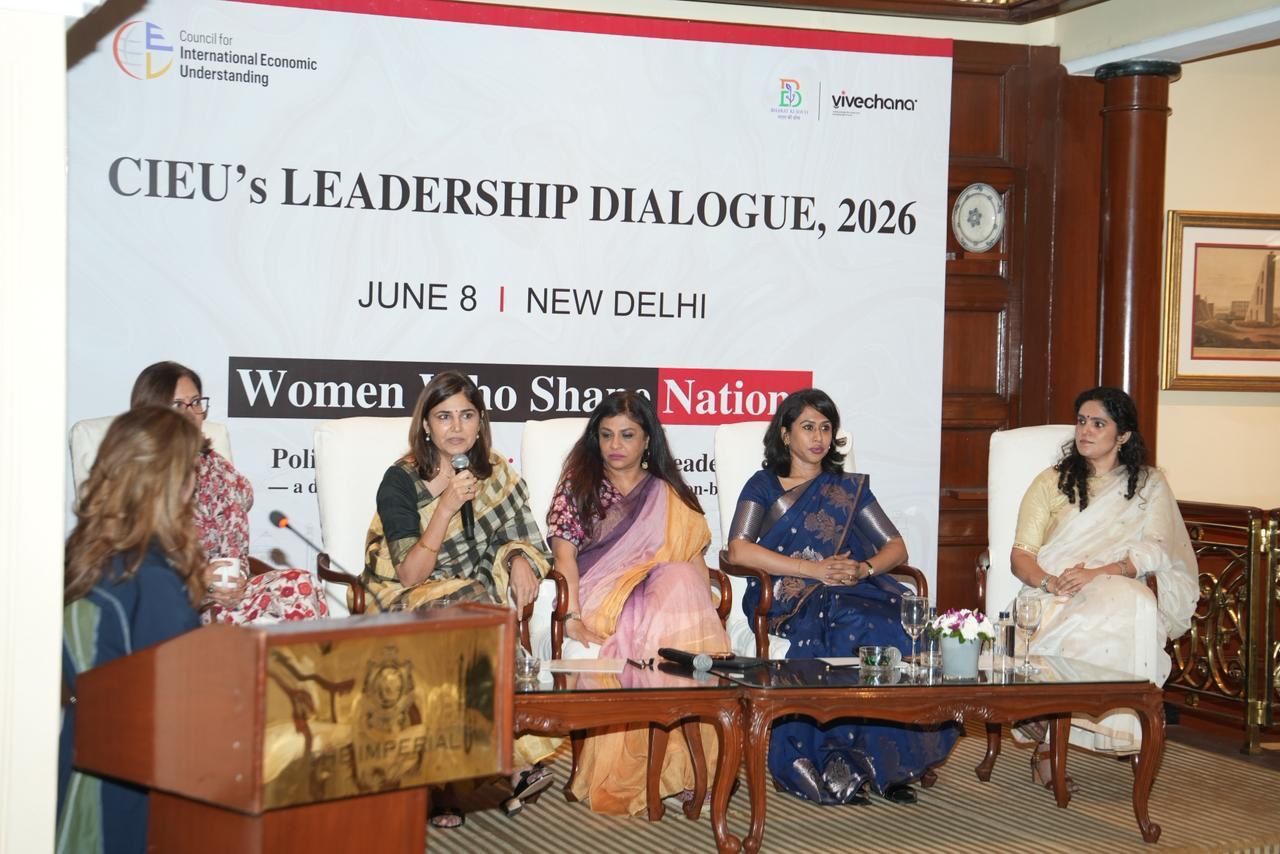
New Delhi, June 9: The need to move beyond symbolic representation and empower women with genuine decision-making authority took center stage at a leadership dialogue organized by the Council of International Economic Understanding (CIEU), where policymakers, diplomats, political leaders and development practitioners discussed the future of women’s leadership in public life.
The panel discussion, titled “Women in Politics: Representation, Participation, and Leadership,” on June 8 brought together prominent voices from politics, governance, diplomacy and grassroots development to examine the structural reforms required to strengthen women’s participation and influence in leadership roles.
Among the distinguished panelists were Carly Partridge, Minister Counsellor at the Australian High Commission in New Delhi; Manisha Ahlawat; Shazia Ilmi; Shama Mohamed; and Chhavi Rajawat, widely recognized as India’s first MBA Sarpanch.
The discussion also provided an opportunity for engagement with several notable personalities, including Meenakshi Lekhi, Jacqueline Mukangira, author Ruhi Tewari and author Tejusvi Shukla.
Speaking during the dialogue, a development sector representative highlighted lessons drawn from extensive grassroots work and regional programmes in rural Rajasthan, emphasizing that the election of women to leadership positions is only the beginning of a much larger journey toward meaningful empowerment.
The speaker argued that while representation remains essential, lasting change requires institutions to create enabling ecosystems that provide women leaders with access to resources, digital and financial literacy, leadership training, and independent executive authority.
“Electing women into positions of leadership is a critical first step, but genuine transformation occurs when leaders are empowered to exercise authority independently and effectively,” the speaker noted, stressing the importance of bridging the gap between policy intent and on-the-ground realities.
The discussion underscored a broader consensus among participants that sustainable policy outcomes depend on addressing grassroots challenges and ensuring that women leaders have the tools and support necessary to translate representation into impactful governance.
The event concluded with a call for stronger institutional mechanisms, inclusive policymaking frameworks, and capacity-building initiatives that can accelerate women’s leadership across political and governance structures.
Organizers said the dialogue aimed to foster meaningful conversations around gender-inclusive leadership and create pathways for greater participation of women in decision-making roles at all levels of public life.