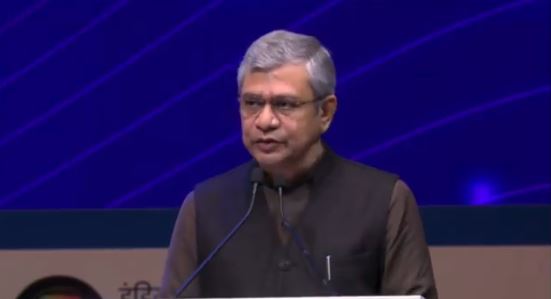
New Delhi, Sep 19: India’s semiconductor ambitions are gaining momentum, with around 200 chip design companies emerging under the India Semiconductor Mission 2.0 (ISM 2.0), Union Minister for Electronics and Information Technology Ashwini Vaishnaw said.
The growth in chip design companies is strengthening India’s domestic semiconductor intellectual property (IP) ecosystem and creating new opportunities for startups, engineers and technology entrepreneurs.
According to the minister, more than 105 chip design startups have so far gained access to advanced Electronic Design Automation (EDA) tools, which are essential for developing and testing semiconductor designs. Of these, 20 startups have also secured venture capital funding, helping them move from early-stage innovation towards commercial development.
India is also expanding its skilled workforce for the semiconductor industry. Around 70,000 chip-design engineers have been trained over the past four years, against the target of 85,000 engineers. The growing talent pool is expected to support semiconductor design, research, manufacturing and related technology activities.
Vaishnaw said global competitiveness in semiconductors will depend not only on technological quality but also on the ability to offer products and services at competitive costs. He also noted that five of the 12 semiconductor plants approved under the first phase of the India Semiconductor Mission have already started commercial production.
The developments point to a gradual expansion of India’s semiconductor ecosystem, covering chip design, manufacturing, packaging, research, talent development and supply chains.
The minister also highlighted India’s growing recognition as a trusted technology partner and its established record of intellectual property protection. These factors are becoming increasingly important as semiconductor companies look to build resilient and diversified global supply chains.
The strong response to SEMICON India 2026 further reflected growing international interest in India’s semiconductor opportunities. The event saw extensive business-to-business engagements and participation from major semiconductor economies, while country-level roundtables provided a platform for companies and governments to explore deeper partnerships.
Foreign Secretary Vikram Misri said resilient semiconductor supply chains would require trusted international partnerships. He identified reliability, credibility, incentives and value creation as important pillars of cooperation and called for a balanced approach to self-reliance that combines India’s domestic strengths with global capabilities.
The India-Singapore Country Roundtable, attended by 142 participants, explored opportunities to combine Singapore’s strengths in manufacturing, advanced packaging and supply-chain management with India’s engineering talent, large domestic market and expanding semiconductor ecosystem.
The India-Europe Country Roundtable, with 139 participants, discussed potential cooperation in areas such as investment, supply-chain localisation, semiconductor equipment and materials, manufacturing, advanced packaging, chip design, research and development, and talent.
The India-South Korea Country Roundtable, attended by 115 participants, focused on strengthening cooperation across the semiconductor value chain. Discussions covered manufacturing, technology, materials, advanced packaging, investment and supply chains, bringing together South Korea’s established semiconductor capabilities and India’s growing engineering talent, market opportunities and manufacturing ecosystem.
With the expansion of chip-design startups, development of skilled talent, commercialisation of approved projects and growing international partnerships, India is building a broader semiconductor ecosystem aimed at supporting domestic innovation while integrating the country more closely with global technology and manufacturing networks.