
Solar energy is one of the most important sources of renewable energy in the modern world. As the demand for electricity continues to increase and environmental problems such as global warming, air pollution, and climate change become more serious, solar power is emerging as a clean, reliable, and sustainable alternative to conventional sources of energy. Solar power uses sunlight to generate electricity and heat, reducing our dependence on fossil fuels such as coal, petroleum, and natural gas.
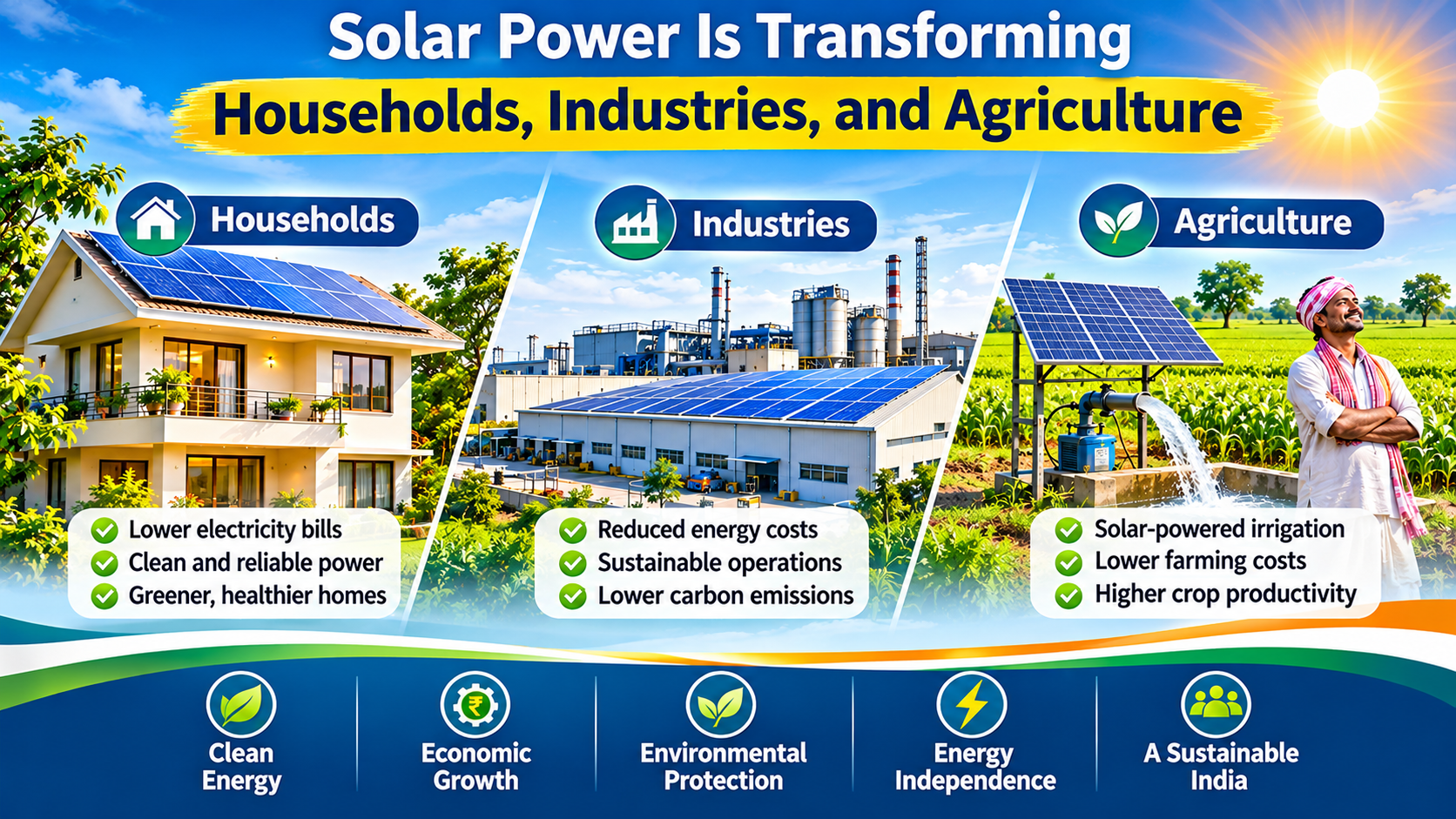
Today, solar energy is transforming three major sectors of society: households, industries, and agriculture. It is not only helping people save money but also creating new opportunities for economic growth and environmental protection.
Solar Power Is Transforming Households
Solar power is changing the way households meet their daily electricity needs. Many families are installing solar panels on their rooftops to generate their own electricity.
Some major benefits of solar power in households include:
-
Reduced electricity bills: Solar panels generate electricity from sunlight, helping families reduce their monthly electricity expenses.
-
Energy independence: Households can become less dependent on traditional electricity supplies, especially when solar systems are combined with battery storage.
-
Environmentally friendly: Solar energy produces electricity without direct greenhouse gas emissions or air pollution during operation.
-
Long-term savings: Although installing solar panels requires an initial investment, they can provide financial benefits over many years.
In India, government initiatives such as the PM Surya Ghar: Muft Bijli Yojana encourage households to install rooftop solar systems. Such programmes are making clean energy more accessible and affordable for ordinary citizens.
Solar Power Is Transforming Industries
Industries require large amounts of electricity to operate machinery, manufacture products, and maintain production processes. Traditionally, most industries have depended on electricity generated from fossil fuels. However, rising energy costs and environmental concerns are encouraging industries to adopt solar power.
Solar energy is bringing several positive changes to the industrial sector:
-
Lower operating costs: Industries can reduce electricity expenses by generating their own power through solar installations.
-
Sustainable manufacturing: Solar power helps industries reduce their carbon footprint and move towards environmentally responsible production.
-
Improved energy security: Generating electricity on-site can reduce dependence on the conventional power grid.
-
Corporate responsibility: Businesses adopting renewable energy can strengthen their reputation and contribute to sustainable development.
Large factories, warehouses, shopping centres, and manufacturing units are increasingly installing rooftop solar panels. Some industries are also investing in large solar farms to meet a significant portion of their energy requirements.
As technology improves, solar power is becoming an important part of the transition towards green industries and a low-carbon economy.
Solar Power Is Transforming Agriculture
Agriculture is another sector experiencing major benefits from solar energy. Farmers often depend on electricity or diesel-powered pumps for irrigation. In many rural areas, electricity supply can be irregular, making farming difficult.
Solar power offers a practical solution to these challenges.
Some important applications of solar energy in agriculture are:
-
Solar irrigation pumps: Farmers can use solar-powered pumps to draw water from wells, ponds, and other sources for irrigation.
-
Reduced farming expenses: Solar pumps reduce dependence on expensive diesel and conventional electricity.
-
Reliable energy supply: Solar-powered systems can provide electricity in remote villages where grid connectivity is limited.
-
Solar-powered cold storage: Solar energy can operate cold storage facilities, helping farmers preserve fruits, vegetables, and other perishable products.
-
Agrivoltaics: This innovative method allows farmers to grow certain crops beneath elevated solar panels, making productive use of the same land for both agriculture and electricity generation.
In India, schemes such as PM-KUSUM promote solar energy adoption among farmers. These initiatives can increase farmers’ income, reduce irrigation costs, and support environmentally sustainable agriculture.
Environmental and Economic Benefits of Solar Energy
Apart from transforming households, industries, and agriculture, solar energy provides several benefits to society as a whole.
Environmental benefits:
-
Reduces greenhouse gas emissions.
-
Helps control air pollution.
-
Conserves limited fossil fuel resources.
-
Supports the fight against climate change.
-
Promotes a cleaner and healthier environment.
Economic benefits:
-
Creates employment opportunities in solar panel manufacturing, installation, and maintenance.
-
Reduces long-term energy expenses.
-
Encourages investment in renewable energy technologies.
-
Supports rural development and energy access.
-
Promotes innovation and sustainable economic growth.
Challenges in Adopting Solar Energy
Despite its many advantages, solar energy also faces certain challenges.
-
High initial investment: Installing solar panels and battery storage systems can be expensive.
-
Weather dependency: Solar panels generate less electricity during cloudy weather and do not generate electricity at night.
-
Storage limitations: Batteries are required to store excess electricity for use when sunlight is unavailable.
-
Land requirements: Large solar power plants require considerable land.
-
Maintenance and recycling: Solar panels and batteries need proper maintenance and responsible recycling at the end of their useful lives.
However, technological advancements, government support, improved battery systems, and falling solar equipment costs are gradually helping to overcome these challenges.
The Future of Solar Energy
The future of solar energy is promising. Improvements in solar panel efficiency, battery storage, smart grids, and solar-powered technologies are making renewable energy more practical and affordable.
In the coming years, solar energy is expected to play an even greater role in homes, factories, schools, hospitals, farms, and transportation systems.
India has significant solar energy potential because of its abundant sunlight. With continued investment, public awareness, and supportive government policies, the country can accelerate its transition towards clean and sustainable energy.
Conclusion
Solar power is no longer just an alternative source of electricity; it is becoming a powerful force for social, economic, and environmental transformation. It is helping households reduce electricity bills, enabling industries to adopt cleaner production methods, and empowering farmers with affordable irrigation and modern agricultural technologies.
Although challenges such as installation costs, energy storage, and weather dependency remain, continuous technological development is making solar energy increasingly accessible.